Sewer Backups and Main-Line Clogs
Challenge: A single slow drain may be a localized clog, but multiple affected fixtures can indicate a main sewer line problem. Warning signs include a toilet that makes a tub or shower drain gurgle, sewage coming through a floor drain, or a bathtub that fills when another fixture is used.
Impact: Wastewater can contaminate floors, walls, belongings, and building materials. Continuing to run water can worsen a backup.
Our response: Stop using all water-consuming fixtures. A plumber can assess the main line, access the cleanout if available, clear the blockage, and use a sewer camera inspection when needed to identify roots, grease, scale, wipes, damaged pipe, a belly, or another obstruction.
Corona’s Utilities Department specifically warns that FOG—fats, oils, and grease—can harden in sewer lines and cause raw sewage to back up into homes, streets, and storm drains. It also says sanitary wipes should not be flushed, including those labeled “flushable.”
Grease, FOG, and Commercial Kitchen Drain Problems
Challenge: Cooking fats, oils, grease, food debris, wipes, and high-volume usage can contribute to clogs in residential kitchens and commercial food-service drains.
Impact: A clogged kitchen drain can back up into sinks, dishwashers, floor drains, or food-preparation areas, creating cleanup and business-interruption concerns.
Our response: Drain clearing, camera inspection, and hydro jetting may be appropriate depending on the pipe condition and blockage. A camera inspection helps distinguish grease buildup from roots, scale, pipe damage, or other causes rather than assuming every blockage has the same source.
Slab Leak Concerns and Hidden Water Leaks
Challenge: A hidden leak can be difficult to locate. Homeowners may notice a warm area of flooring, a higher water bill, meter movement with fixtures off, reduced pressure, a running-water sound, damp flooring, or moisture at walls.
Impact: Undetected leaks may waste water, damage finishes, contribute to mold conditions, and require more extensive repairs if not addressed.
Our response: Leak detection can help identify the likely location and type of leak before a repair plan is selected. Depending on the confirmed cause, repair options may involve a localized repair, reroute, water-line repair, pipe replacement, or repiping.
Water Heater Leaks, No Hot Water, and Sediment Concerns
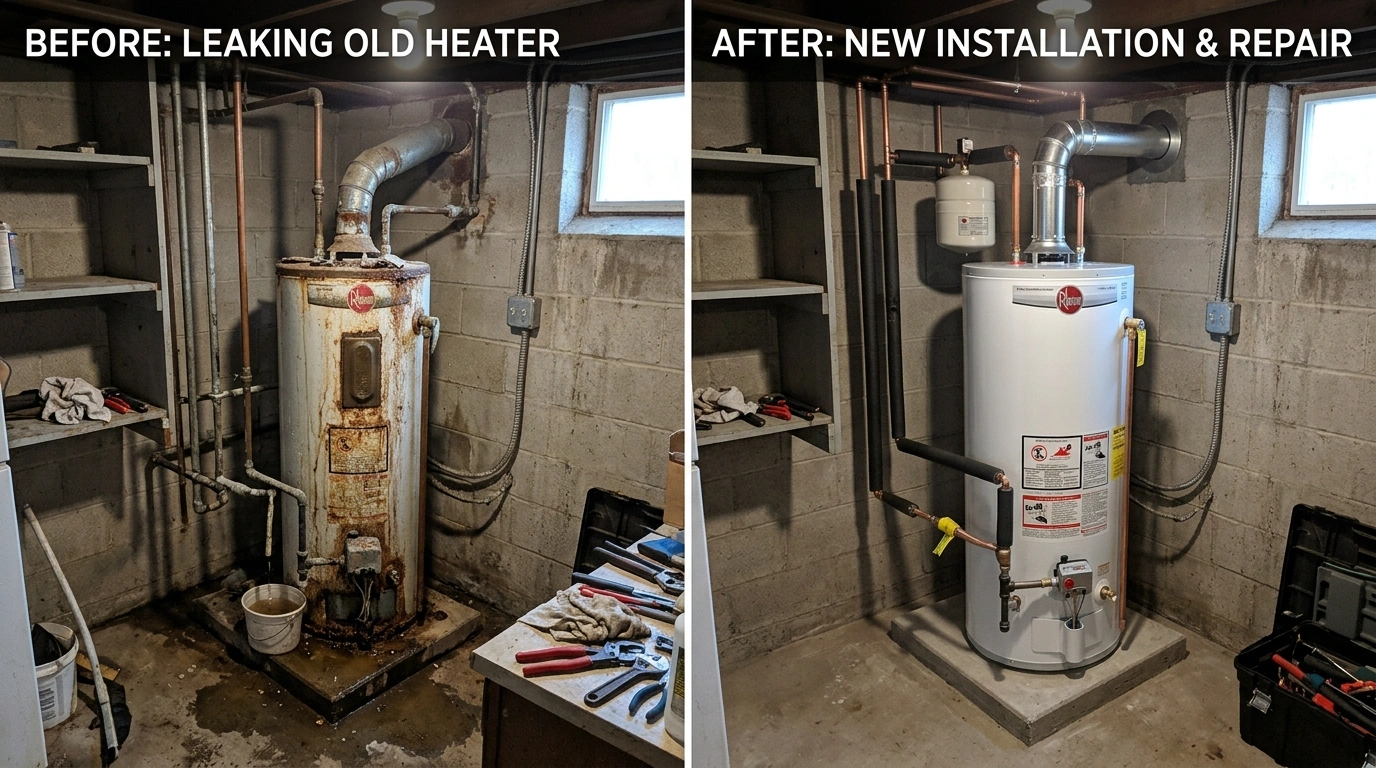
Challenge: A water heater that leaks from the bottom, discharges from the temperature-and-pressure relief valve, produces rusty water, makes loud popping or rumbling sounds, or fails to provide hot water may need urgent attention.
Impact: A leaking tank can release water into a garage, utility area, closet, attic space, or finished room. A gas odor or suspected gas leak is a safety emergency, not a routine water-heater appointment.
Our response: Shut off the water supply to the heater if you can do so safely. If you smell gas, leave the area and contact SoCalGas or 911 from a safe location. For non-gas emergencies, a plumber can inspect the tank, valves, connections, drain pan, venting, and related components to determine whether repair or replacement is appropriate.
Corona’s water is identified by the City as hard to very hard, and its 2025 treated average hardness was 146 mg/L. That supports regular attention to scale, sediment, water-heater flushing, and fixture maintenance, while recognizing that each heater must be inspected individually.
Low Water Pressure, High Pressure, and Pressure-Regulator Problems
Challenge: Low pressure can be isolated to one fixture or affect the entire property. High pressure can put strain on plumbing components and expose weak valves, supply lines, or appliance connections.
Impact: Low pressure disrupts showers, appliances, and daily use. Excessive pressure may contribute to repeated leaks, noisy pipes, dripping relief valves, and premature fixture wear.
Our response: Corona Utilities recommends checking the outside hose bib, ensuring the shutoff valve near the meter is fully open, considering whether the pressure regulator needs adjustment or replacement, and placing a water softener in bypass to see if flow improves. If the problem is within private plumbing, a licensed plumber can inspect the regulator, service line, filters, softener, valves, and fixtures.
Burst Pipes, Ceiling Leaks, and Fixture Failures
Challenge: Supply hoses, toilet valves, washing-machine connections, refrigerator lines, dishwasher connections, hose bibs, faucets, and hidden pipe sections can fail suddenly.
Impact: Water can spread quickly through cabinets, flooring, walls, ceilings, insulation, and electrical areas.
Our response: Shut off the nearest fixture valve or the main water shutoff if safe. Avoid standing water near power sources. Move belongings away from the area, take photos when safe, and call for emergency pipe repair or water-leak service.
Gas-Line and Gas-Equipment Safety
Challenge: A gas odor, hissing around a gas meter, damaged gas piping, or a water heater that smells of gas requires immediate safety action.
Impact: Gas leaks can create fire, explosion, property-damage, and injury risks.
Our response: Leave the area immediately. Do not light flames, smoke, start vehicles nearby, use electrical switches, or operate appliances. Call SoCalGas at 1-800-427-2200 or call 911 from a safe location. Do not re-enter solely to shut off equipment.